
PhD thesis by UNICAMP, State University of Campinas, entitled “The organ art in the Benedictine Monasteries of Colonial and Imperial Brazil: their organs, organists and organists”, defended in February 2014, with Dr. Helena Jank as advisor.
Main Author: Handel Cecilio Pinto da Silva (Cecilio, Handel)
terminal-ri-sophia-biblioteca-webABSTRACT:
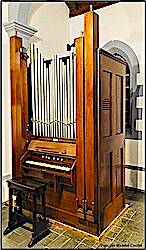
The pipe organ, even not having its genesis within the ecclesiastical environment, was adopted by the Christian Church and converted into a liturgical instrument par excellence, having been consecrated in the sixteenth century by the Council of Trent. In this environment, it was possible for the instrument to experience technical development in construction, the upgrading of its resources and enhanced timbristic variety. The organistic art of Brazil, with its roots in the iberian organ school of organ building, begun in the sixteenth century was maintained throughout the succeding centuries. At first, small positive organs (placed on a table or on the floor) and realejo organs brought from Portugal were employed. Later, during the eighteenth century, the Portuguese Crown supplies brazilian cathedrals and churches with large fixed pipe organs. Also in the same century, organs began to be built in situ, at the time when the art of organ building in Brazil begins to take place, it was the genesis of Brazilian pipe organ building. Considering the disappearance of most pipe organs of the brazilian colonial and imperial periods, through a documentary historical survey it has been possible to rediscover these instruments. Various church documents have recorded purchases, installations and maintenance of these pipe organs as well as payments made to organists. Chroniclers of the times and diaries of travelers attest to the presence and use of these instruments. The organistic art of the Order of Saint Benedict is manifested through the acquisition, instalations and maintained of their pipe organs, their organist monks and organ builders who worked for benedctine monasteries. The Portuguese and Brazilian Benedictine monasteries adopted the pipe organ as the instrument for their Divine Services, keeping this tradition to the present day. As an effort to rescue the organistic universe traditions of both Brazilian Colonial and Imperial Periods, ecclesiastical and secular documented records as well as chronicles of the times on pipe organs, organists and pipe organ builders have been examined and studied in detail and presented in a concise and objective manner.
Tags: Benedictine Order; Brazilian Organistic Art; Pipe Organ; Brazilian – Colonial period, 1500-1822; Brazilian – Imperial period, 1822-1889.