
Organist research in the Missions
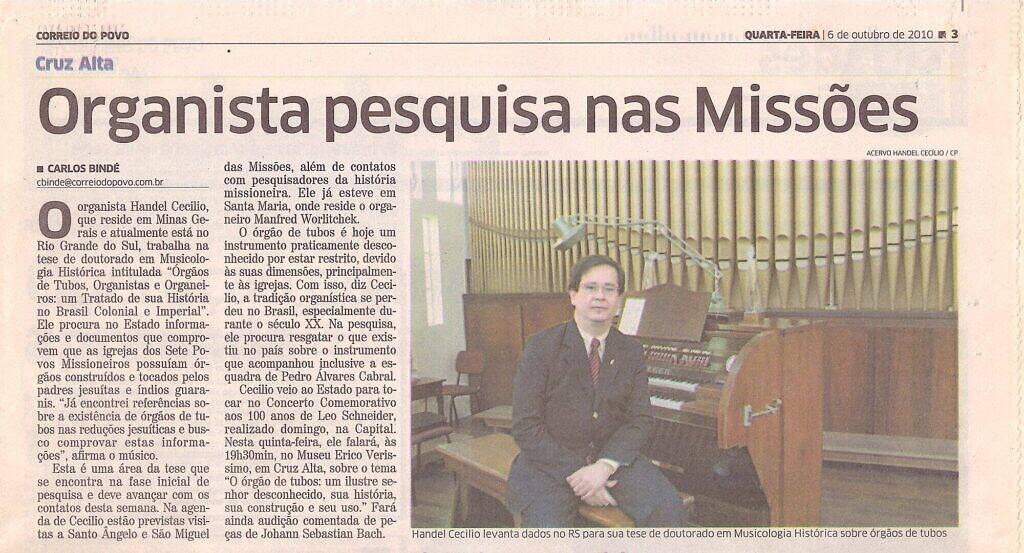
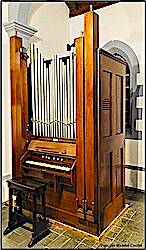
The organist Handel Cecilio, who lives in Minas Gerais and is currently in Rio Grande do Sul, works on his doctoral thesis in Historical Musicology entitled “Pipe Organs, Organists and Organists: a Treaty of their History in Colonial and Imperial Brazil” He searches the State for information and documents proving that the churches of the Seven Missionary Peoples had organs built and played by Jesuit priests and Guarani Indians. “I have already found references to the existence of pipe organs in the Jesuit reductions and I seek to prove this information,” says the musician. This is an area of the thesis that is in the initial phase of research and should advance with the contacts this week. Cecilio’s agenda includes visits to Santo Ângelo and São Miguel das Missões, as well as contacts with researchers of missionary history. He has already been to Santa Maria, where organ builder Manfred Worlitchek lives. The pipe organ is today a virtually unknown instrument because it is restricted, due to its size, mainly to churches. As a result, Cecilio says, the organ tradition was lost in Brazil, especially during the 20th century. In his research, he seeks to rescue what existed in the country about the instrument that even accompanied the squadron of Pedro Álvares Cabral. Cecilio came to the State to play at the Commemorative Concert to the 100 years of Leo Schneider, held Sunday in the Capital. This Thursday, he will speak, at 7:30 pm, at the Erico Veríssimo Museum, in Cruz Alta, on the theme “The pipe organ: an illustrious unknown gentleman, its history, its construction and its use.” He will also make commented hearing of pieces by Johann Sebastian Bach.