
COVER ARTICLE
Organists, restorers and scholars try to discover the origin and characteristics of instruments awaiting repair. The work is difficult and requires care
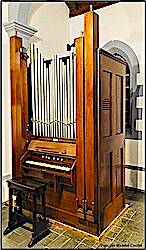
In the bucolic district of Córregos, 40 kilometers from Conceição do Mato Dentro, on the road of the Estrada Real, a movement to preserve the organ of the Parish Church of Nossa Senho- ra Aparecida is gaining momentum. At the forefront are the organist, harpsichordist and pianist Handel Cecilio and the restorer Alexandre José de Assis. They are making a survey of the piece carved in cedar, but which has little documentation to shed more light on its past. “Our idea is to restore it, which is perfectly possible, but we are still doing preliminary research, both on the history and on the analysis of the composition of the pipes. In 1905, it underwent a restoration,” says Handel, who is doing a master’s degree in music at Unicamp.
Originally, the organ of the church of Córregos, a Catholic temple listed by Iphan, had 329 pipes: 235 metal and 94 wood. Only 118 remain. There are 47 notes on the keyboard. “The phonic part is the soul of the instrument”, the organist emphasizes, revealing that many farms in Minas Gerais had their own. The existence of one of them in the church of an isolated place is due to the opulence during the mining period, he explains.