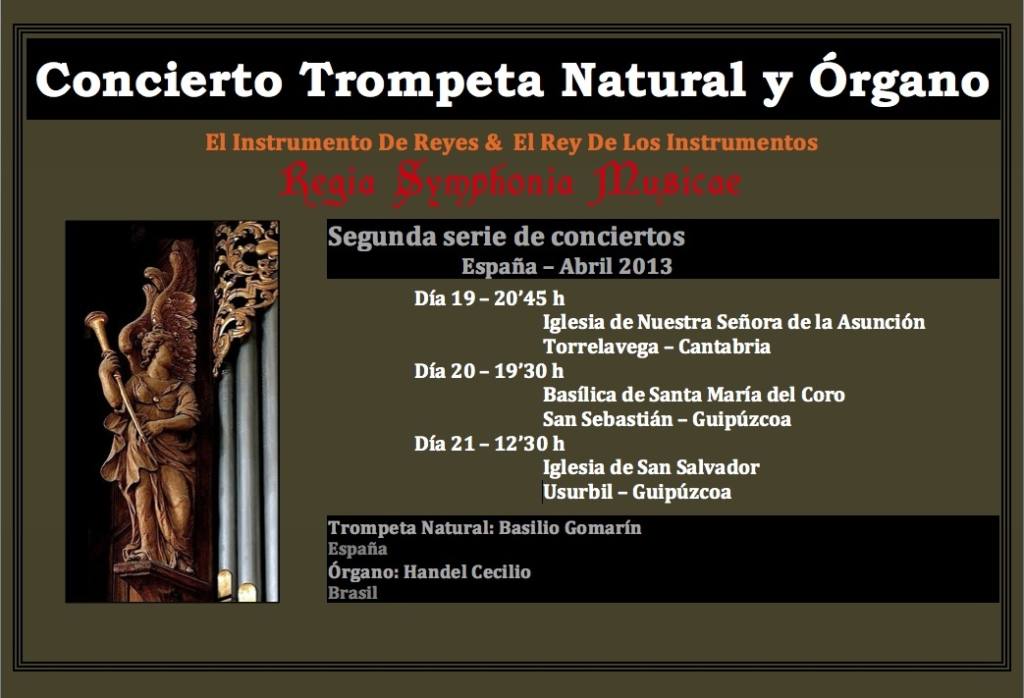
Handel Cecilio (Organ) & Basilio Gomarín (Trumpet Natural)
Coordinator and Director of Concert Cycles: Enrique Campuzano Ruiz
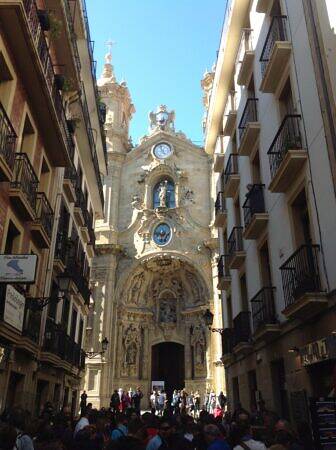
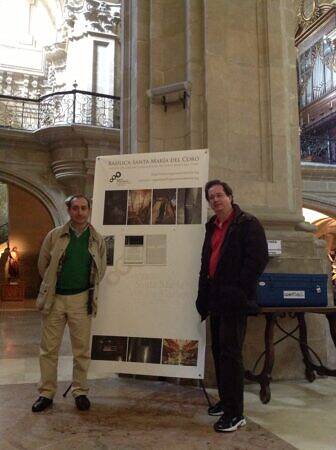
Basílica de Santa María del Coro
San Sebastián – Guipúzcoa – Spain
April 20, 2013 – 19h30
Aristide Cavaillé-Coll Pipe Organ (1863)
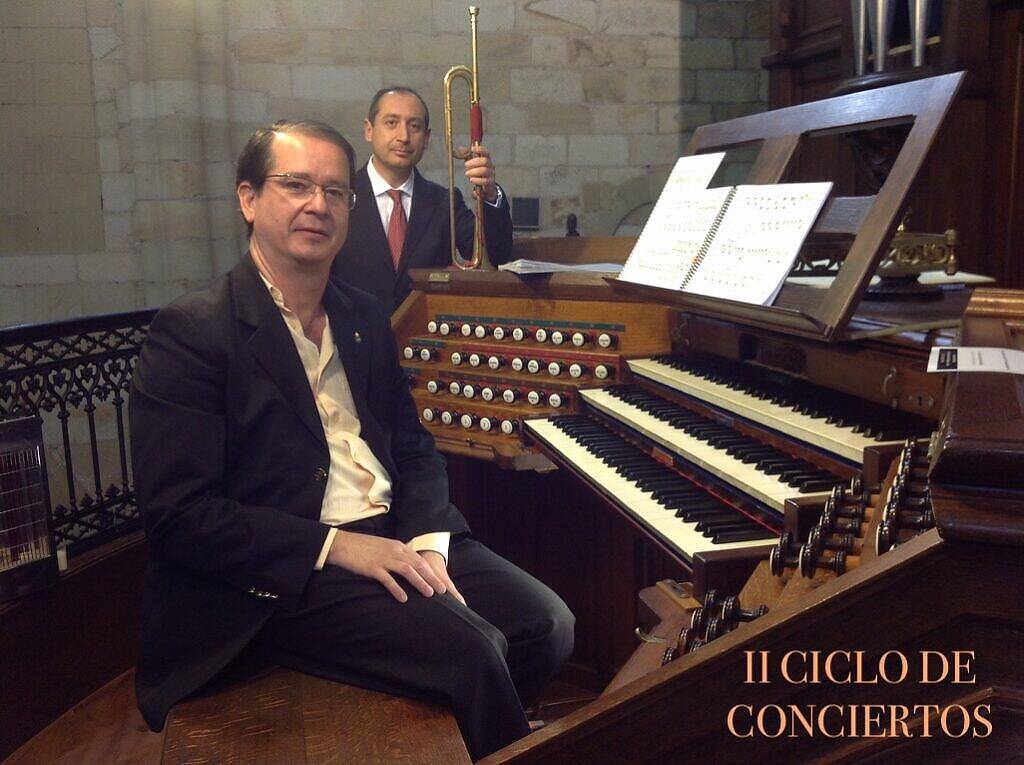
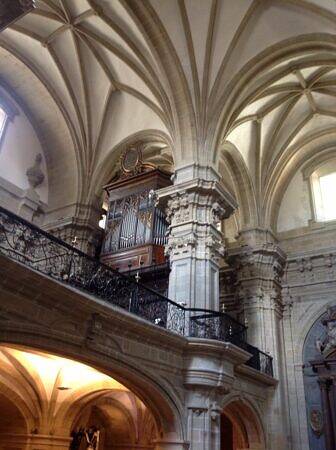
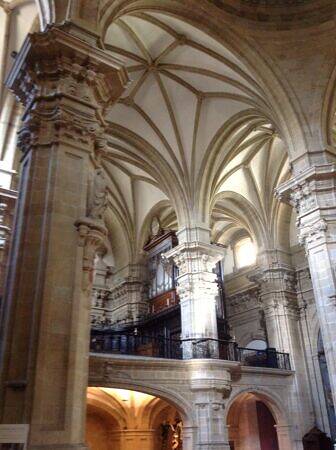
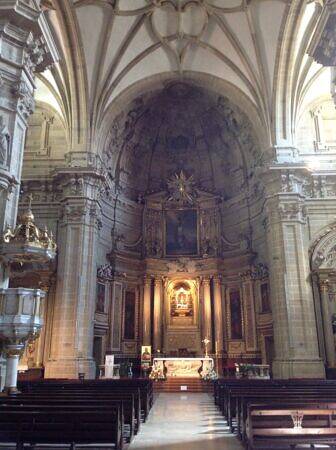
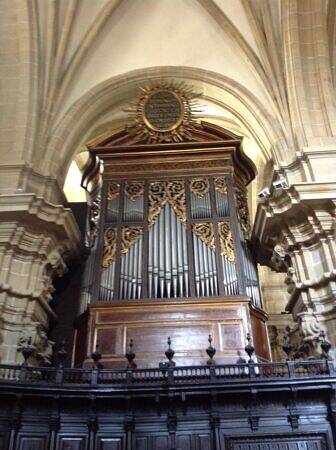
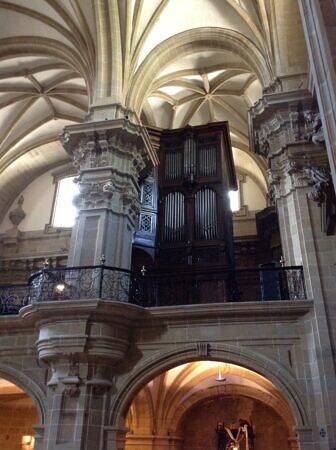
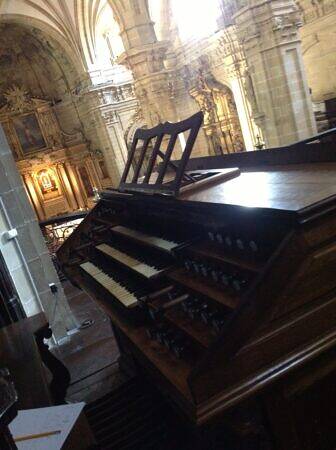
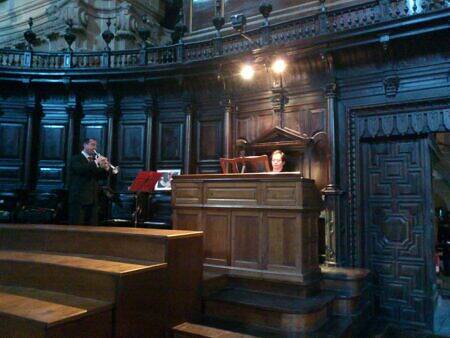
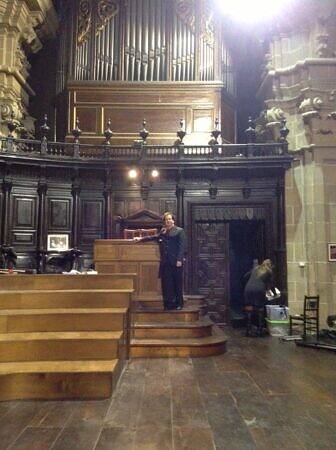
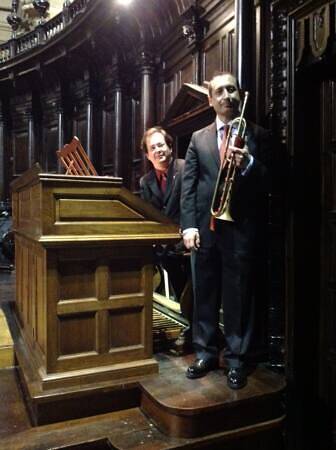
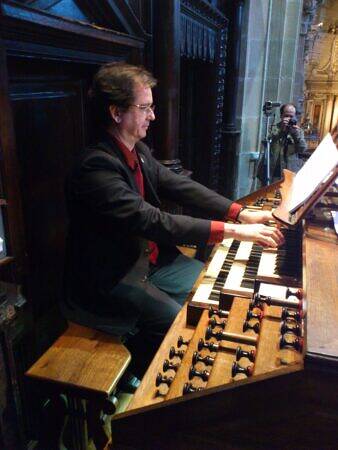
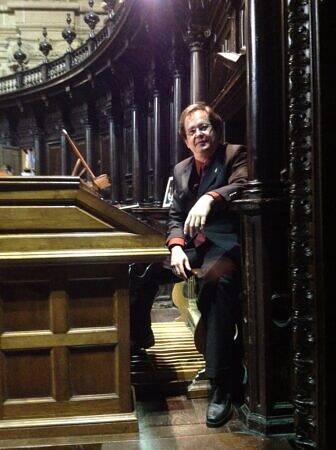
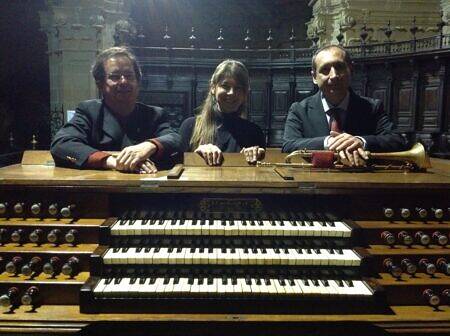
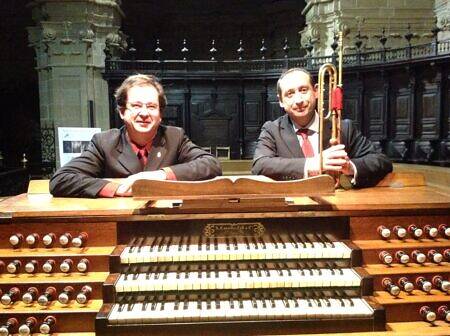
The great Aristide Cavaillé-Coll organ (1863) of the Basilica of Saint Mary of the Choir of Saint-Sebastian
Aristide Cavaillé-Coll (Montpellier February 4, 1811, Paris October 13, 1899) built this instrument (1863, 44 stops) between those of the Basilica of Sainte-Clotilde (1859, 46 stops) the Church of Saint-Sulpice (1862, 100 stops) and that of the Cathedral of Notre Dame (1868, 86 stops) all in Paris. This is a key period, both in terms of the activity of his workshop and the development of the French organ school, in which the renewal of the instrument’s workmanship and that of its interpretation and compositional literature coincided. The work of his contemporary César Franck (1822-189), the summit of the French Romantic organ and titular organist of a great Cavaillé-Coll organ, that of Sainte-Clotilde, from its inauguration until his death, is considered inseparable, in his compositions and in his improvisations and concerts, from the novel technical characteristics of the Cavaillé-Coll organs. Each inauguration of a new great Cavaillé-Coll organ in Paris (Sainte-Clotilde, Saint-Sulpice, Notre-Dame, already mentioned, and later those of the Sainte-Trinité (1868) and the Trocadéro Palace (1878) was a social event, a reason for festivities and great inaugural concerts, in the presence of the authorities and the whole of Paris with the participation of the best French organists of the time, César Franck, of course, but also Camille Saint-Saëns, Charles-Marie Widor and many others, in which compositions often written ad-hoc for the organ to be inaugurated were premiered. The influence of the Cavaillé-Coll organs would extend beyond the organists of his generation, let us not forget that Charles Tournemire (1870-1939) not only considered himself a disciple of Franck but also inherited the job of organist at Sainte-Clotilde in 1898 and remained faithful to it, like Franck, until his death. It is no exaggeration to say, for both Franck and Tournemire, that their Cavaillé-Coll was the springboard that allowed them to develop their careers and acquire the fame they enjoyed among their contemporaries and today.
Born among organ builders, a tradition started by Joseph Cavaillé, an uncle of his grandfather Jean-Pierre Cavaillé (1743-1808), continued by the latter and by his father Dominique Cavaillé-Coll (1771-1862), his family led an itinerant life between France and Spain -Jean Pierre married a Catalan woman in Barcelona, Maria Francisca Coll, who will pass her surname to the family – following the political events, between wars and revolutions, at the end of the XVIIIth century and the beginning of the XIXth, until settling first in Toulouse and later in Paris where Aristide will be at the head of a family workshop, the Cavaillé-Coll house, where he will work together with his father Dominique and his brother Vincent.The production of the house of Cavaillé-Coll throughout its years of activity is enormous – it is estimated that it made nearly 700 organs from 1838 to 1898 – and includes identical instruments, generally of modest dimensions, manufactured in series. The same is not true of the larger and more important organs, where the problems of installation, volume, power, stops, architectural requirements and customer expectations are considerable and pose real challenges for the manufacturer, who can take years between design, construction and installation of the organ.
Much is said about the technical innovations introduced by Aristide Cavaillé-Coll, among them the bellows system with differential pressures, the Barker machine and its derivatives, and the richness and variety of the harmonic registers. However, beyond the technical characteristics, Aristide’s constant effort in the search for expressiveness, the balance of the sound planes that converge in crescendo in incomparable tutti, and the diversity of the timbres and their sonorities, similar in strength and quality to those of the instruments of an orchestra, to the point that his organs came to be described as symphonic. The one in the Basilica Santa María del Coro in San Sebastián is one of the great organs made by the House of Cavaillé-Coll, not only because of its size, but also because of the care taken in its installation (by Vincent, Aristide’s brother) and its design, very respectful of the architecture of the basilica and the tradition of the Spanish baroque organ – even keeping the traditional nomenclature and measurement of its registers – perhaps echoing the Spanish past of the family, and the quality of its performance. The work for its construction and installation took two and a half years.
It has 44 stops, on three 54-note manual keyboards and a 27-note pedal, with 2,366 pipes whose dimensions are comparable to those of the largest cathedrals. It is an organ with a complete acoustics, of great fullness and power, which makes sound from the bass to the treble all the frequencies audible by a human being, producing a sweet and beautiful sound. Difficult to play, it is said that the organist must truly and physically join an endless mechanics that activates the sound to the top of the case.
Façade – Cavaillé-Coll Organ – Basilica Santa Maria del CoroCavaillé-Coll Organ – Basilica Santa Maria del CoroKeyboard – Cavaillé-Coll Organ (1863) Basilica Santa Maria del Coro Pedal – Cavaillé-Coll organKeyboards – Cavaillé-Coll organ Complete console – Cavaillé-Coll Organ – Santa María del Coro Inaugurated by the organist José Antonio Santesteban, who like Franck and Tournemire was the confidant of his organist partner until his death in 1906, the organ of Santa María del Coro in San Sebastián has been the object of admiration of music lovers, parishioners, organists and musicologists, such as Father Nemesio Otaño (1880-1956) who in 1928 considered it “the first in all of Spain for its phonic qualities”.Today it is internationally recognized as one of the best preserved Cavaillé-Colls in the world in the sense that, unlike others, it has undergone few changes since its inauguration, which is why it is considered a reference for the performance of romantic organ music, particularly that of César Franck.
By Loreto Aramendi – Organista titular del órgano Cavaillé-Coll (1863) de la Basílica Santa María del Coro, San Sebastián; pianista & clavecinista – Concertista internacional